 Diana Walsh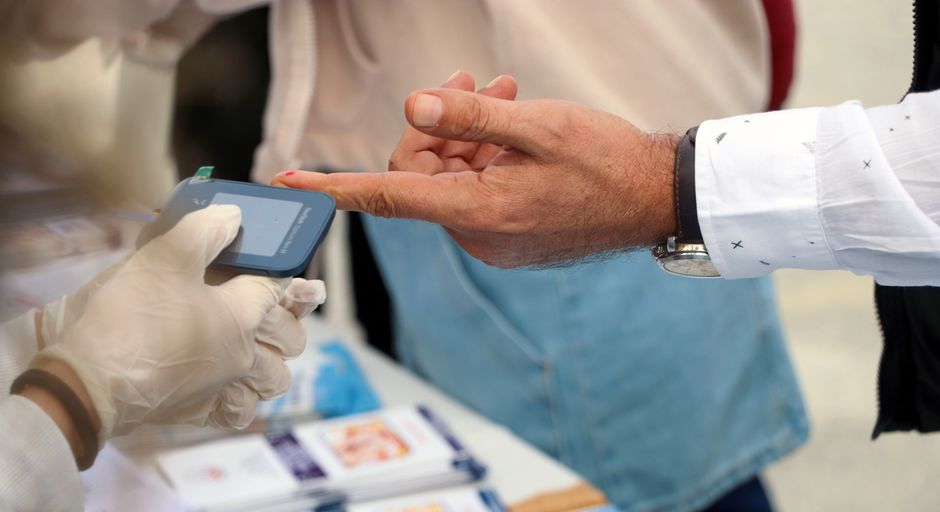
Urine ketone strips cost about $10 for 50 of them. That’s not the problem. The problem is that millions of people are using them as their primary feedback tool on keto, and by the third or fourth week, those strips are quietly lying to them. Not maliciously. Just biochemically.
Let me explain what’s actually happening.
What the Strip Is Actually Measuring
Urine ketone strips detect acetoacetate, one of the three ketone bodies your body produces. The other two are beta-hydroxybutyrate (BHB) and acetone. Here’s the catch: BHB is the dominant ketone in the blood during established ketosis, often representing 70-80% of circulating ketones. Acetoacetate, the one the strip reads, is a precursor. Your body converts acetoacetate into BHB as ketosis deepens.
So the strip is measuring the metabolite you’re using less of, not more of.
The color chart on the Ketostix packaging (the most common brand, currently around $10-12 for 50 strips) runs from beige through pink to deep purple, representing trace, small, moderate, and large ketone concentrations. Most people think deeper purple means they’re doing better. That’s the first mistake. Ketone levels in urine reflect overflow, not efficiency. Your kidneys dump excess ketones they can’t reuse. As your body becomes keto-adapted, it gets better at using ketones rather than excreting them, so urine readings often go down even as metabolic ketosis is humming along perfectly.
I see this constantly with longer-term clients. Someone’s been strict keto for six weeks, feeling great, losing fat, sleeping well. They test and get a trace reading. They panic. They haven’t cheated. Nothing’s wrong. Their mitochondria just got better at the job.
The Hydration Problem Nobody Talks About Enough
Urine strips are concentration-dependent. Drink a liter of water an hour before testing and your ketones will appear lower than if you tested first thing in the morning after eight hours of sleep. This isn’t a flaw in your strip. It’s basic chemistry: more fluid, more dilute sample, lighter color on the strip.
A reader named James, who’d been low-carb since early 2025, emailed me frustrated that his ketones were “disappearing.” He tested every afternoon after his gym sessions, when he was well-hydrated. I had him switch to first morning urine for two weeks. His readings jumped from trace to moderate, nothing else changed.
Concrete example: Client testing at 2pm after 1.5L water intake, reading trace/negative → switched to first-morning void → reading moderate/large for the same dietary intake. Same person, same diet, different time of day.
Timing matters more than most strip instructions admit.
When Strips Are Actually Useful
Keto Diet: Does It Really Work for Weight Loss? · Doctor O'Donovan on YouTube
I don’t want to write these things off entirely. That would be lazy.
For someone in the first two weeks of keto, urine strips are perfectly adequate feedback. Acetoacetate spillage is high in early ketosis because the body hasn’t yet upregulated the machinery to use ketones efficiently. The strips will light up reliably. You know you’re in ketosis. Good. That’s useful information at a useful moment, for about $0.20 per test.
They’re also a cheap sanity check after a high-carb event. Had pizza at a work dinner? Testing the next morning tells you quickly whether you’ve knocked yourself out of ketosis. You don’t need precision there. You need a rough signal. The strip delivers.
Scenario: Client suspects a restaurant meal knocked them out of ketosis, unsure whether to reset or continue → urine strip next morning shows negative → they extend fasting window by four hours and retest → moderate reading confirms return to ketosis, no need for a full restart.
The strip did its job. Nobody needed a blood meter for that.
Where Blood Meters Actually Win
| Tool | Primary Ketone Measured | Cost (Meter) | Cost per Test | Best Use Case |
|---|---|---|---|---|
| Urine Strips | Acetoacetate | ~$10-12/50 | ~$0.20 | First 2 weeks of keto, quick sanity checks |
| Blood Meter (Keto-Mojo) | Beta-hydroxybutyrate (BHB) | ~$60 | ~$1-1.50 | Therapeutic ketosis, metabolic disease tracking, precision monitoring |
| Breath Meter (Biosense) | Acetone | ~$200 | $0 (no strips) | General ketone tracking without recurring costs |
If you’re using ketosis therapeutically, meaning for epilepsy management, metabolic disease, or serious fat loss tracking, the precision gap matters. Blood ketone meters like the Keto-Mojo (currently around $60 for the meter, roughly $1-1.50 per test strip) measure BHB directly from a finger stick. That’s the number that matters clinically. The target range for nutritional ketosis is typically 0.5-3.0 mmol/L BHB. Your urine strip can’t tell you whether you’re at 0.6 or 2.4. That’s a meaningful difference if you’re trying to hit a therapeutic window.
I’ll be honest: I thought blood meters were overkill for most people for years. I recommended urine strips almost universally. Then I started using a Keto-Mojo with a small group of clients tracking metabolic health markers, and the feedback quality was genuinely different. One client who was getting “large” on urine strips was actually running at 0.8 mmol/L, perfectly fine but not the high-ketosis state she thought she was in. Another client showing “trace” on urine strips was at 1.4 mmol/L in the blood. The strips had the ranking almost backwards.
That changed how I counsel people who have specific therapeutic goals. For general low-carb maintenance? Urine strips are fine. For precision? They’re not the right tool.
Breath acetone meters (like the Biosense, around $200) sit somewhere in the middle. No recurring strip cost, measures a different ketone again (acetone, the one you exhale), and the correlation to BHB is decent but not perfect. As of July 2026, the research on breath meters is more encouraging than it was a few years ago, but I wouldn’t call them validated for therapeutic use quite yet.
Reading Your Strip Correctly: The Actual Protocol
If you’re going to use urine strips, do it right.
Test first morning urine. Second void is fine if the first is very dark; that one can be artificially concentrated. Don’t test post-workout when you’re dehydrated in a different direction. Don’t refrigerate strips (they degrade). Check the expiration date, and check the storage: strips exposed to humidity give false readings, which matters if you keep them in a bathroom. Read the strip at exactly the time specified, usually 40 seconds, not 2 minutes later when the color has shifted further.
And understand the color chart for what it is: a rough gradient, not a precise scale. The difference between “small” and “moderate” on a Ketostix strip represents a urine concentration range, not your blood ketone level.
Sources
- Laffel L (1999). “Ketone monitoring and diabetic ketoacidosis.” Diabetes/Metabolism Research and Reviews. Foundational review of ketone body biochemistry and detection methods.
- Musa-Veloso K, et al. (2002). “Breath acetone is a reliable indicator of ketosis in adults consuming ketogenic meals.” American Journal of Clinical Nutrition. Relevant to breath meter comparisons.
- Keto-Mojo validation data (published on their clinical resources page): Independent accuracy comparisons of blood BHB meters vs. urine strips.
- Phinney S & Volek J. The Art and Science of Low Carbohydrate Living (2011): Detailed explanation of keto-adaptation and why urinary ketones decline over time in adapted individuals.
- Veech RL (2004). “The therapeutic implications of ketone bodies.” Prostaglandins, Leukotrienes and Essential Fatty Acids. Background on BHB as the primary circulating ketone in established ketosis.
Photo: Mehmet BALCI via Pexels
This article is for general informational purposes only and does not constitute medical or dietary advice. Always consult a licensed healthcare provider or registered dietitian before making significant changes to your diet, especially if you have a medical condition.