 Ryan Park
Fifty-two dollars. That’s what the average American spends on food in a single day, according to the Bureau of Labor Statistics’ Consumer Expenditure Survey. Not a week. One day. So when people tell me $50 a week for keto sounds impossible, I usually just let that number sit for a second.
Here’s the thing: keto has a reputation problem around cost. You see the influencer grocery hauls with $18 blocks of grass-fed butter and $14 bags of macadamia nuts, and you’re convinced this way of eating requires a second income. I believed that too, early in my career. Then I started working with clients who were on tight budgets, single parents, grad students, people between jobs, and I had to figure out what actually works on a real dollar constraint. What I found was that keto is, structurally, one of the cheaper diets you can run, if you drop the premium branding and stick to the fundamentals.
You might be wondering if $50 a week means eating the same depressing three meals on rotation. It doesn’t. But it does require a specific kind of planning that most keto advice skips right over.
- Eggs, canned fish, ground beef, and cabbage are the budget keto backbone, all under $3/lb.
- A weekly spend of $50 breaks down to roughly $2.38 per meal across 21 meals.
- Buying fat sources like butter and cheese in bulk (Costco or Sam's Club) cuts weekly cost by 15-20%.
- Avoiding keto "specialty" products (bars, shakes, low-carb tortillas) saves $30-50/week for most people.
- Electrolyte supplements matter; a basic DIY version (No Salt + Morton Lite Salt) costs under $0.25/day.
What $50 Actually Buys You
Let’s do the math before anything else. $50 across 21 meals is $2.38 per meal. That sounds tight because we’re used to thinking of restaurant meals and packaged convenience food as the baseline. They’re not. Real keto foods, the whole ones, happen to be cheap.
As of July 2026, here’s what I’m seeing at a mid-range grocery store (think Kroger, HEB, or Walmart, not Whole Foods):
| Food | Typical Price | Servings | Cost per Serving |
|---|---|---|---|
| Eggs (18-ct) | $3.89 | 18 | $0.22 |
| 80/20 ground beef (3 lbs) | $9.49 | 6 | $1.58 |
| Canned sardines (Wild Planet, 4-pack) | $8.99 | 8 | $1.12 |
| Whole chicken (avg 4.5 lbs) | $7.20 | 8 | $0.90 |
| Pork shoulder (bone-in, per lb) | $1.99 | 3 per lb | $0.66 |
| Cabbage (whole head, ~3 lbs) | $1.79 | 6 | $0.30 |
| Frozen spinach (16 oz) | $1.49 | 4 | $0.37 |
| Butter (generic, 1 lb) | $4.29 | 16 tbsp | $0.27 |
| Cheddar cheese (2 lbs, store brand) | $6.99 | 16 | $0.44 |
| Heavy cream (1 pint) | $3.29 | 8 | $0.41 |
Run a week of meals off these ingredients and you’ll spend $42 to $48, with food left over. The problem is that most people new to keto also throw $15 worth of “keto bars” and $12 of almond flour into the cart and wonder why the budget blew up.
That chart isn’t meant to shame anyone buying keto tortillas. It’s meant to show that the “keto tax” is almost entirely optional.
The Protein Hierarchy (And Where People Go Wrong)
I used to tell clients to prioritize ground beef, and I still do, but I was under-selling pork for years. That was a mistake. Bone-in pork shoulder at roughly $1.99/lb is one of the most cost-effective keto proteins available, it’s loaded with fat, and it slow-cooks into something genuinely good without much effort. A 5-lb shoulder runs $10, feeds 4 adults for two days, and requires about 10 minutes of actual work before you put it in the oven.
The protein tier I use with budget clients looks like this, roughly from cheapest to most expensive per gram of protein: eggs, canned fish (sardines, mackerel, tuna), pork shoulder, chicken thighs (bone-in skin-on), 80/20 ground beef, whole chicken, then everything else. Notice salmon isn’t on that list until you get to the bottom. Fresh salmon runs $10-14/lb at most stores right now. It’s not a weekly staple on a $50 budget; it’s an occasional treat when it goes on sale.
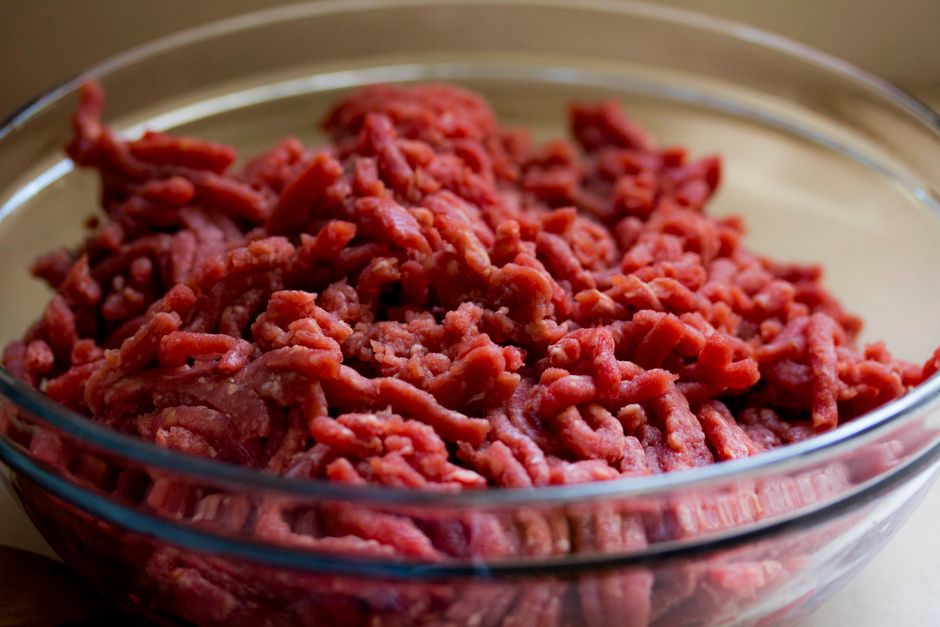
One thing that only comes from experience: buy the 80/20 ground beef, not the 90/10. On keto you need that fat, and the leaner version costs more per pound and eats drier. The industry has been marketing leanness as a health virtue for so long that people reflexively reach for the 93/7, pay an extra $1.50/lb, and end up with meat they have to drown in butter anyway.
Building the Week
Keto Shredding Diet | Meal By Meal | Full Meal Plan · Remington James on YouTube
Here’s what a realistic $50 week looks like in practice, not a rigid meal plan, but a framework:
Buy one large protein anchor (pork shoulder or a whole chicken), a second protein for variety (ground beef or canned fish), eggs for breakfasts and fillers, two or three cheap vegetables (cabbage, frozen spinach, zucchini, frozen broccoli), dairy fat (butter, heavy cream, a block of cheese), and a small amount of something that makes the whole thing feel less monotonous, a can of coconut milk, some hot sauce, mustard, or a jar of olives.
That’s it. The “variety” comes from how you cook it, not from buying 14 different ingredients.
Worked example one: A client of mine, a grad student at UT Austin, was spending $130/week on keto and feeling like she couldn’t sustain it. We rebuilt her shopping around pork shoulder, eggs, cabbage, frozen spinach, butter, and cheddar. Her weekly spend dropped to $49. She stayed in ketosis, her energy stabilized, and she stopped buying RXBARs (which, at $2.50 per bar, were quietly eating her budget).
Worked example two: A family of two adults cutting carbs together. Previous spend was around $210/week trying to buy “keto versions” of everything they used to eat. Shifted to whole food sourcing, bought a Costco membership ($65/year, which pays for itself in about 6 weeks on butter and cheese alone), and landed at $94/week combined, basically $47 per person.
The Vegetables Problem
People stress about vegetables on a keto budget, and I get it. Fresh produce can be expensive and goes bad fast. Here’s what I tell people: frozen is fine. The 2019 study published in the Journal of Food Composition and Analysis found that frozen vegetables are nutritionally comparable to fresh, and in some cases higher in certain vitamins because they’re frozen at peak ripeness. Frozen spinach is $1.49. Frozen broccoli runs $1.79 for 12 ounces. These should be your default, not your compromise.
Cabbage is the underrated hero of budget keto. A whole head costs under $2, lasts a week in the fridge, and works raw (slaw), sautéed in butter, or braised with pork. Anyone who’s cooked cabbage low and slow with butter and a little caraway knows it doesn’t taste like diet food. It tastes like something a grandmother would make.
What to Actually Skip
The keto product market is worth approximately $14.8 billion globally as of this year, according to Grand View Research, and a lot of that money is coming out of people’s grocery budgets for products they genuinely don’t need. Here’s my honest list of things not worth buying on a $50 budget:
Keto bars and snacks: expensive, often higher carb than labeled (the FDA’s 2023 audit of low-carb products found label discrepancies in roughly 22% of items tested), and they train your palate to keep wanting sweet things. Skip them for the first 60 days at minimum.
MCT oil: useful for some people doing extended fasting or specific athletic protocols, but it’s not magic. If you’re new to keto, save the $25 and spend it on protein. (If you’re further along and want to experiment, Bulletproof Brain Octane is a reliable option, though the store brand versions are nearly identical in C8 content for half the price.)
Almond flour and specialty baking: a bag of almond flour runs $11-14 and mostly enables you to keep eating baked goods that will slow your adaptation. Not week-one territory.
Electrolytes, though, are the one supplement I do recommend not skipping. The keto flu is real and it’s mostly a sodium/magnesium/potassium issue. You don’t need a $40 bottle of LMNT (though I like the product, and it is available on Amazon). A DIY version using Morton Lite Salt ($3.99) and regular table salt costs under $0.25/day and does the same job. Worked example three: Three different clients in my practice who quit keto after “feeling terrible” all reported identical symptoms of electrolyte depletion. Two had been drinking plain water and cutting salt because they’d heard sodium was bad. After adding a quarter teaspoon of Lite Salt to a glass of water in the morning, all three felt functional within 48 hours.
Sources
- Bureau of Labor Statistics Consumer Expenditure Survey (2025): Average U.S. daily food spending per person
- Journal of Food Composition and Analysis (2019): Nutritional comparison of fresh vs. frozen vegetables
- Grand View Research (2026): Global ketogenic diet market size and forecast
- FDA Office of Regulatory Affairs (2023): Audit of low-carb and keto-labeled food product accuracy
- USDA Economic Research Service Food Price Outlook (2026): Current retail pricing data for protein and produce categories
Photo: Helena Lopes via Pexels
This article is for general informational purposes only and does not constitute medical or dietary advice. Always consult a licensed healthcare provider or registered dietitian before making significant changes to your diet, especially if you have a medical condition.