 Mark Chen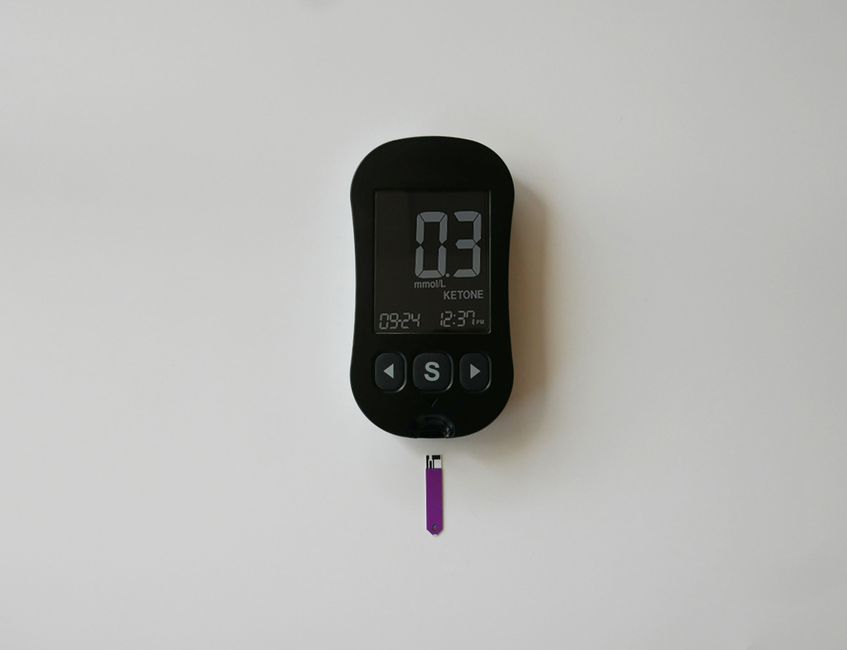
Most people assume they need a urine strip or a blood meter to know if keto is “working.” I understand why. The testing industry has done a thorough job of convincing us that measurable equals real. But here’s the thing: I’ve worked with clients who were clearly, demonstrably in ketosis and had stopped testing weeks earlier. I’ve also seen people with a mild positive on a strip who weren’t burning much fat at all. The strips tell you one thing; your body tells you several.
You might be wondering whether you’re actually in ketosis right now, or whether that low-carb eating you’ve been doing for the past week has “kicked in” yet. That’s exactly the right question to be sitting with. And the honest answer is: there are real, reliable signals your body gives you, and some of them are more trustworthy than a $12 box of Ketostix.
Let me walk you through what those signals actually are, how to read them accurately, and where people get tripped up.
- Ketosis typically produces 4-6 measurable physical signs within the first 3-5 days of strict carb restriction.
- Reduced hunger and stable energy (no blood sugar crashes) are among the most reliable ongoing indicators.
- Urine strips are least accurate after 4-6 weeks on keto, when your body gets efficient at using ketones.
- "Keto breath" is a sign of acetone excretion, which appears in early to mid-ketosis, usually days 2-4.
- If you're tracking net carbs under 20g daily and eating enough fat, you're almost certainly in ketosis by day 5.
The Signs That Actually Mean Something
The first reliable signal, and one I tell every new client to watch for, is a change in hunger. Not reduced appetite from eating a big meal. A qualitative shift in how hunger feels. People in ketosis describe it as less urgent, almost optional. You notice you could eat, but you don’t feel compelled to. This is your brain running on ketones instead of depending on the next glucose spike. It’s real, and it usually shows up around day 3 or 4 of strict carb restriction.
Closely related: your energy stops cycling. On a carb-heavy diet, most people feel a dip after lunch, another one mid-afternoon, maybe a crash by 6 p.m. In ketosis, that wave-and-trough pattern tends to flatten. Not everyone gets the legendary “mental clarity” that keto evangelists promise. But the crashes go away for most people. When a client stops mentioning 3 p.m. slumps, I start asking what they’ve been eating.
Then there’s the breath. I know nobody wants to hear this, but acetone breath is genuinely useful information. It’s distinctly sweet or faintly fruity, sometimes described as slightly metallic. It’s different from bad morning breath. A few clients have described it as nail polish remover. The acetone you’re exhaling is a ketone body, and it shows up a little before you’d get a positive urine strip reading. It peaks in early to mid-ketosis, usually days 2 through 5, and often fades as your body becomes more efficient. If you’re smelling it, you’re likely in or approaching ketosis.
What People Often Mistake for Signs (And What to Do With Them)
Here’s where I want to be direct, because a lot of keto content gets this wrong.
Rapid weight loss in the first week is not a sign of ketosis. It’s mostly glycogen depletion and the water that was bound to it. I made this mistake myself when I first started experimenting with low-carb protocols: I saw the scale drop 6 pounds in four days and assumed everything was working perfectly. Some of it was, but the weight loss was mostly water. Real fat-burning kicks in later. The scale dropping fast early on tells you that you’ve cut carbs. That’s it.
Similarly, fatigue and brain fog in days 1-3 are not signs of ketosis. They’re signs of carb withdrawal and electrolyte loss. Your kidneys excrete more sodium when insulin drops, which takes magnesium and potassium with it. A lot of people confuse “keto flu” with ketosis itself. These are distinct things. You can feel miserable and not be in ketosis yet. You can also be in ketosis while feeling great, which is actually the goal. If you’re in that rough early window, a quality electrolyte supplement like LMNT or Nuun Sport will help more than any strip.
A Practical Way to Assess Where You Are
Keto Diet Theory Put to the Test · NutritionFacts.org on YouTube
Rather than relying on any single signal, I ask clients to run a quick informal check across four categories. Not a formal test. More like a gut-check conversation with yourself.
Hunger and cravings: Have they noticeably dropped? Are you going 4-6 hours between meals without anxiety? Do carb cravings feel less insistent?
Energy pattern: Is the afternoon crash gone or reduced? Do you feel relatively stable from morning through early evening?
Physical sensations: Any acetone breath (days 2-5 especially)? Slightly increased thirst, which is normal? Mild headache that passed after electrolytes?
Dietary reality check: Have you actually been under 20-25g net carbs consistently? Not roughly. Precisely. This is where most people overestimate their compliance. A kitchen scale like the OXO Good Grips digital scale (around $30 on Amazon, and the one I still recommend to clients) removes a huge amount of guesswork here. (Note: this site may earn a commission on Amazon purchases.)
If you’re hitting 4 out of 4, you’re almost certainly in ketosis by day 5 or 6.
How Physical Signs Compare to Testing Methods
I get asked constantly whether it’s worth buying a blood ketone meter. Here’s the honest comparison, current as of August 2026:
| Method | Cost | Accuracy | Best Use Case | Limitation |
|---|---|---|---|---|
| Urine strips (Ketostix, generic) | $8-15 for 50 strips | Low-moderate after 4-6 weeks | Early adaptation only | Misleading once adapted; measures excreted, not used, ketones |
| Breath meter (Ketonix, BIOSENSE) | $150-200 one-time | Moderate | Ongoing use without recurring cost | Doesn’t directly measure blood BHB |
| Blood ketone meter (Keto-Mojo) | ~$50 + $1-2 per strip | High | Precise therapeutic or medical keto | Expensive per-test over time |
| Physical symptom tracking | Free | Surprisingly good for most people | Daily monitoring, no supplies needed | Subjective; requires practice to read accurately |
The Keto-Mojo is what I’d recommend if you genuinely need precise numbers, for therapeutic reasons or managing a specific condition. For most people doing dietary keto for metabolic health or fat loss? Symptom tracking plus strict carb counting is genuinely sufficient.
Real Client Scenarios
Client A wanted confirmation she was in ketosis without buying strips. She’d been under 20g net carbs for 5 days, noticed reduced hunger, and described faint acetone breath on days 3 and 4. Energy had stabilized. When she finally did test with a blood meter a week later, her BHB read 1.8 mmol/L. Solidly in ketosis, as expected from her symptoms.
Client B was convinced he wasn’t in ketosis because his energy was still low. He’d been tracking carbs, the symptom picture looked right, but the fatigue hadn’t lifted. He wasn’t taking any electrolytes. Added 2g sodium, 400mg magnesium, and 1g potassium daily. Within 48 hours, energy normalized. He tested a few days later: 1.2 mmol/L. He’d been in ketosis the whole time, just underelectrolyed.
Client C was relying only on urine strips after 8 weeks on keto. Strips were consistently showing trace or negative, and she’d convinced herself she’d “fallen out” of ketosis. She hadn’t changed her diet and felt fine. This is the adaptation problem I mentioned: after 6-8 weeks, your muscles get efficient at using ketones and excrete far less in urine. Blood test confirmed 0.9 mmol/L. Nutritional ketosis. The strips had just become unreliable for her stage.
Sources
- Volek JS, Phinney SD (2012): The Art and Science of Low Carbohydrate Living – foundational reference on ketone production and adaptation timelines.
- Cahill GF (2006): “Fuel Metabolism in Starvation,” Annual Review of Nutrition – describes ketone body physiology and acetone excretion.
- Newman JC, Verdin E (2017): “Beta-hydroxybutyrate: A Signaling Metabolite,” Annual Review of Nutrition – covers BHB as a measurable marker of ketosis.
- Urbain P, Bertz H (2016): “Monitoring for compliance with a ketogenic diet: what is the best time of day to test for urinary ketosis?” Nutrition & Metabolism – directly addresses urine strip reliability and timing.
Photo: i-SENS, USA via Pexels
This article is for general informational purposes only and does not constitute medical or dietary advice. Always consult a licensed healthcare provider or registered dietitian before making significant changes to your diet, especially if you have a medical condition.