 Emma Lawson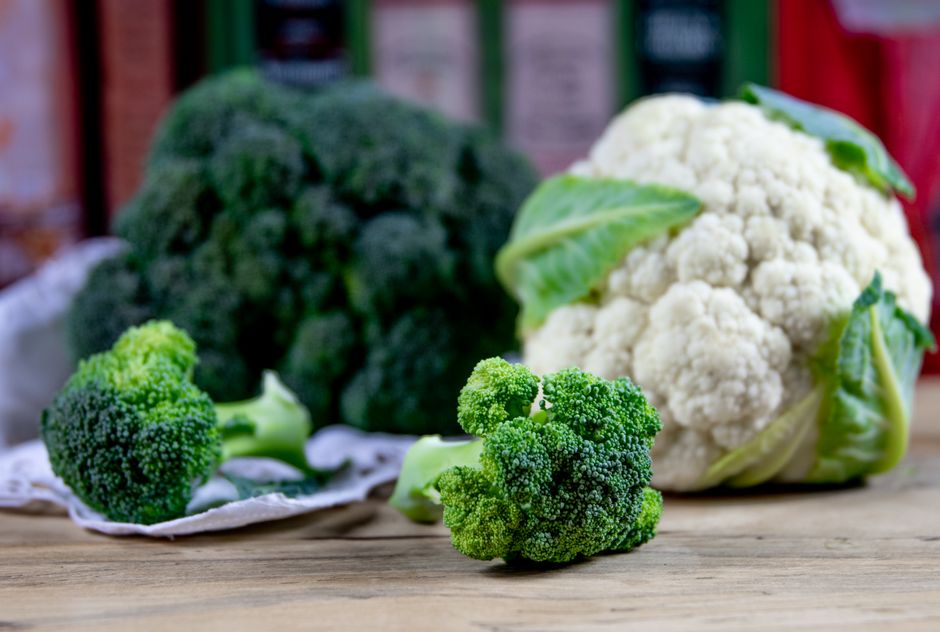
Cruciferous vegetables get lumped into a generic “eat your greens” category on most keto sites, which is genuinely unhelpful. Some of them will knock you out of ketosis if you’re not paying attention to portions. Others are so low in net carbs you could eat a pile the size of your head and barely register. The difference matters, and most articles don’t bother to spell it out.
Let me fix that.
The short version: broccoli, cauliflower, cabbage, Brussels sprouts, kale, and bok choy are the workhorses of a keto-adapted cruciferous rotation. They’re fiber-dense, nutrient-rich, and tolerable in meaningful quantities without blowing your carb budget. But portion size is not optional information, and a few cruciferous vegetables (kohlrabi, raw turnips in volume) deserve more caution than they typically get.
- Cauliflower and bok choy are the lowest net-carb crucifers: roughly 2g net carbs per 100g cooked.
- Brussels sprouts run about 5g net carbs per 100g; fine in a side-dish portion, easy to overeat.
- Fiber matters: cruciferous vegetables bulk up your gut microbiome in ways that support long-term keto adherence.
- Cooking method affects volume and perceived satiety, roasted crucifers are easier to overeat than steamed.
- Sulforaphane from broccoli sprouts is the one legitimate micronutrient story here worth knowing about.
The Actual Numbers, Side by Side
Before I give opinions, here’s the data I return to when clients ask which vegetables to prioritize. These are net carbs (total carbs minus fiber) per 100g cooked, which is the only figure that matters for ketosis.
| Vegetable | Net carbs / 100g cooked | Realistic serving | Net carbs in serving |
|---|---|---|---|
| Bok choy | ~1g | 150g (generous bowl) | ~1.5g |
| Cauliflower | ~2g | 150g | ~3g |
| Cabbage | ~3g | 120g | ~3.5g |
| Kale | ~4g | 80g (dense after cooking) | ~3g |
| Broccoli | ~4g | 150g | ~6g |
| Brussels sprouts | ~5g | 120g | ~6g |
| Kohlrabi | ~6g | 100g | ~6g |
| Turnip | ~6g | 100g | ~6g |
A few things jump out. Broccoli and Brussels sprouts look identical to kale in net carbs per 100g, but people eat larger portions of roasted broccoli than they do of wilted kale. That’s where the math quietly slides. I’ve had clients tracking their macros carefully and still stalling, and the culprit was a generous broccoli habit they were counting as “basically free.”
Kale is slightly counterintuitive: it looks high on paper but cooks down so aggressively that 80g cooked came from close to 200g raw. The serving math works in your favor.
Cooking Method Changes Everything
This is something you only figure out by actually cooking these vegetables repeatedly: roasting concentrates flavor and shrinks volume, which makes it much easier to eat 300g of Brussels sprouts than 300g steamed. That’s not a problem with Brussels sprouts. It’s a problem with how we track.
My standing advice to clients: weigh cooked weight when you’re logging, not raw. It’s more accurate and easier to eyeball consistently. A food scale is non-negotiable here. The one I’ve used for years in my own kitchen is the Ozeri Pronto Digital Multifunction Kitchen Scale (usually around $12 on Amazon, and the site may earn a commission on purchases like this). Nothing fancy. Just use it.
Steam or blanch when you want volume and satiety. Roast when you want flavor and don’t mind eating smaller portions. Stir-fry with bok choy gives you the best of both.
One reader, Taryn from Portland, emailed me in early 2026 after stalling for three weeks despite being “perfect” on keto. She’d switched to roasting all her vegetables a month prior. Once she started weighing cooked portions instead of estimating raw, she dropped 4 pounds in the following two weeks. That’s not magic. That’s math.
The Sulforaphane Thing (Worth Knowing, Easy to Overstate)
The 10 Best Zero Carb Foods (that make keto easy) · Dr Dan Maggs on YouTube
Every few months someone asks me if they should be eating broccoli sprouts specifically because of sulforaphane. Honest answer: the research is interesting but far from settled for humans.
Sulforaphane is a compound produced when you chew or chop cruciferous vegetables, particularly broccoli sprouts. Lab and animal studies have shown real anti-inflammatory and potentially anti-cancer effects. Human trials are ongoing, and the signal is promising enough that I don’t dismiss it. A 2017 study in Cancer Prevention Research showed sulforaphane metabolites in human blood after broccoli sprout consumption, which at least confirms bioavailability. Whether clinical outcomes follow is a different question.
Practically: eating broccoli a few times a week is fine. Buying $40 bags of freeze-dried broccoli sprout powder because you read a podcast transcript? That’s getting ahead of the evidence.
One thing most people miss: sulforaphane is maximized when myrosinase (an enzyme in the plant) is active, which means light steaming rather than hard boiling. Boil broccoli long enough and you’ve deactivated the enzyme. Steam for 3-4 minutes and you’re preserving more of the precursor activity. I didn’t know this until I read a 2018 paper in the Journal of Agricultural and Food Chemistry and had to quietly update what I was telling clients.
Digestion and the Gas Problem
Let’s be direct about this because keto forums are weirdly squeamish about it. Cruciferous vegetables cause gas. The sulfur compounds that make them nutritionally interesting are the same ones your gut bacteria ferment into hydrogen sulfide. This is normal, not a sign that you’re eating something wrong.
That said, if you’re transitioning to keto and adding a lot of cruciferous vegetables at once, you’re doubling up on gut disruption. New macros, new fiber sources, potentially new electrolyte status. The bloating that some people attribute to cruciferous vegetables in the first two or three weeks is often just the overall dietary shift.
Practical approaches that actually help:
Start with cooked vegetables rather than raw. Raw broccoli and raw cabbage are significantly harder to digest than their cooked counterparts. This isn’t a dramatic difference, but it matters enough that clients who start with steamed options consistently report fewer issues than those who go straight to salads.
Chew thoroughly (I know, this sounds patronizing, but cruciferous vegetables genuinely benefit from mechanical breakdown before they reach your gut).
Digestive enzymes formulated for cruciferous vegetables (look for ones containing alpha-galactosidase, the same enzyme in Beano) can help if you’re particularly sensitive. I don’t suggest them as a permanent crutch, but they’re useful during the transition.
Building a Rotation That Doesn’t Get Boring
Here’s a scenario that plays out more than you’d think: someone goes keto, discovers cauliflower rice, eats it four times a week for a month, then quits because they can’t stand the smell anymore. Cauliflower has a particular sulfur aroma when it overcooks that genuinely puts people off for months. I made this mistake myself in my first year eating low-carb. Took me a while to come back to it.
The fix is rotating across the full spectrum:
Week 1 anchor: Bok choy stir-fried with garlic and sesame oil (quick, low net carbs, different flavor profile entirely)
Week 2 anchor: Roasted cabbage wedges with olive oil and caraway seed (underrated, cheap, works as a side to basically anything)
Week 3 anchor: Kale sautéed with lemon and anchovy paste (the anchovy sounds alarming; it dissolves into umami and nobody will know)
Week 4 anchor: Broccoli roasted until the florets char slightly (the char matters, it shifts the flavor from “healthy side” to something you’d actually crave)
Scenario from my practice: a client eating the same steamed broccoli and cauliflower daily → switched to a four-vegetable rotation with varied cooking methods → reported significantly higher diet adherence at her 90-day check-in and lost 11 pounds over that period versus 4 in the prior 90 days. Attribution is messy with dietary interventions, but she credited not feeling like she was eating punishment food.
Sources
- USDA FoodData Central: Nutritional data for all vegetables referenced, as of July 2026
- Fahey JW et al. (2002): “Broccoli sprouts: An exceptionally rich source of inducers of enzymes that protect against chemical carcinogens,” PNAS (foundational sulforaphane research)
- Dinkova-Kostova AT & Talalay P (2008): “Direct and indirect antioxidant properties of inducers of cytoprotective proteins,” Molecular Nutrition & Food Research
- Vermeulen M et al. (2008): “Myrosinase activity in human intestinal microbiota: effect of cruciferous vegetables on sulforaphane bioavailability,” Journal of Agricultural and Food Chemistry
- Shapiro TA et al. (2006): “Human metabolism and excretion of cancer chemoprotective glucosinolates and isothiocyanates of cruciferous vegetables,” Cancer Epidemiology, Biomarkers & Prevention
Photo: Magda Ehlers via Pexels
This article is for general informational purposes only and does not constitute medical or dietary advice. Always consult a licensed healthcare provider or registered dietitian before making significant changes to your diet, especially if you have a medical condition.