 Ryan Park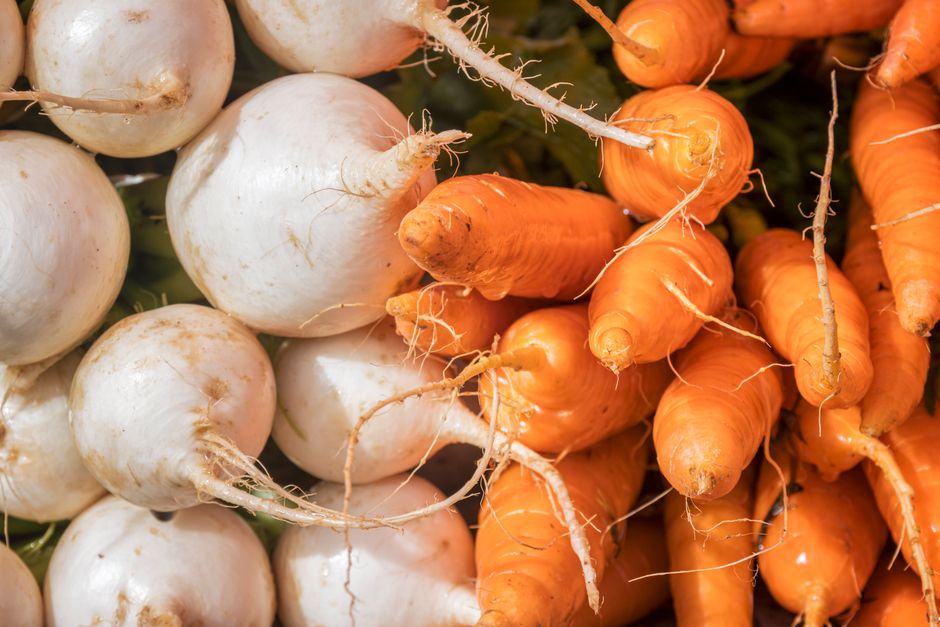
11.4 grams of net carbs per cup. That one number gets carrots kicked off more keto meal plans than almost any other vegetable, and honestly, it’s worth taking seriously before you decide either way.
You might be wondering whether carrots are just one of those foods that sounds borderline but is actually fine, or whether the keto community is right to treat them like contraband. I’ve had this exact conversation with probably a hundred clients. The answer isn’t “eat all you want” and it isn’t “never touch them.” It’s more specific than that, and it depends on how you’re eating keto and what your actual carb target looks like.
Here’s the thing most carb-count charts don’t tell you: portion size with carrots is everything. A single baby carrot has about 0.7 grams of net carbs. Eight of them is roughly 5.5 grams. That’s a snackable amount for most keto eaters. But a generous cup of chopped carrots puts you at 11+ grams, which for someone targeting 20 grams of net carbs per day, is more than half their budget in one side dish. The math shifts fast.
- One cup of raw carrots has ~11.4g net carbs, making large portions risky on strict keto.
- A serving of 4-5 baby carrots (~3g net carbs) fits most moderate low-carb plans.
- Cooking carrots raises their glycemic index but doesn't significantly change net carb count.
- People targeting 20g net carbs daily should treat carrots as a "budget" food, not a free vegetable.
- Those on a more relaxed 50g net carb threshold can include carrots without much concern.
What the Carb Numbers Actually Look Like
Let me put the real data side by side, because “carrots are high in carbs” only means something when you see what you’re comparing them to.
As of August 2026, the USDA FoodData Central database lists raw carrots at 9.6 grams of total carbs per 100 grams, with 2.8 grams of fiber, landing you at about 6.8 to 7.4 grams of net carbs per 100g depending on the measurement method. A medium carrot weighs roughly 60 grams, so you’re looking at about 4.3 grams of net carbs for one carrot. Not catastrophic. Not free, either.
| Carrot Form | Serving Size | Net Carbs | Context |
|---|---|---|---|
| 1 baby carrot (raw) | ~10g | ~0.7g | Very low risk |
| 4 baby carrots (raw) | ~40g | ~2.8g | Works for most keto plans |
| 1 medium carrot (raw) | ~60g | ~4.3g | Moderate, plan accordingly |
| 1 cup chopped (raw) | ~128g | ~9.6g | High for strict keto (20g limit) |
| 1 cup cooked/boiled | ~156g | ~11.4g | Pushes limits hard |
| Carrot juice, 8 oz | ~240ml | ~21g | Avoid on keto |
Cooked carrots deserve a separate mention. Boiling or roasting doesn’t meaningfully reduce the carb content, but it does increase the glycemic index (GI). Raw carrots score around 35 on the GI scale. Cooked carrots jump to somewhere between 47 and 85, depending on how long they’re cooked. A 2008 study in the European Journal of Clinical Nutrition showed that cooking method significantly affects the glycemic response of carrots, with longer cooking times producing more gelatinized starch and faster glucose spikes. That matters if you’re eating keto specifically for blood sugar control or insulin resistance, not just weight loss.
The Part Most Keto Advice Gets Wrong
Here’s what I used to think, and I’ll be honest: I was wrong about this for years. I assumed that glycemic index was the most important factor for deciding whether a food fit keto. High GI? Skip it. Low GI? Fine. But glycemic index is calculated for a fixed 50-gram carbohydrate portion of food. To get 50 grams of carbs from carrots, you’d have to eat about 700 grams of carrots. Nobody does that.
Glycemic load corrects for this. It accounts for both the GI and the realistic portion size. Raw carrots have a glycemic load of only 3 for a typical 80-gram serving, which the Harvard T.H. Chan School of Public Health classifies as “low.” The carrot’s reputation as a blood-sugar spiker is, for practical portions, mostly undeserved. This won’t make carrots a “free food” on keto. But it does mean a few baby carrots with hummus (if you’re doing low-carb rather than strict keto) isn’t going to torpedo your metabolism.
Three Real-World Scenarios
Lasagna without Noodles?! Meal Prep Dinner Idea, Low Carb, Keto Friendly · Low Carb Love on YouTube
Client scenario 1: Marie, a 47-year-old office manager in Portland, was doing strict keto at 20g net carbs per day. She was eating a small side salad with shredded carrots most nights, roughly 30g worth. That was only 2 grams of net carbs, and she stayed in ketosis consistently. She’d panicked when she read that “carrots aren’t keto” and nearly cut them out. I told her to keep them. The serving size was the whole answer.
Client scenario 2: David, a 55-year-old contractor in Phoenix, was making a big pot of beef stew every Sunday with three large carrots in the batch. He divided it into six portions, meaning about half a carrot per serving, around 2.2g net carbs from carrots alone. Fine. The problem was he was also estimating rather than weighing his portions, and he’d been eating closer to two servings at a time without realizing it. Once he started using a kitchen scale (I use an OXO Good Grips 5-pound scale, about $30 on Amazon, and it’s the single most useful keto tool I own), he realized his “one portion” was actually 480 calories and 12g net carbs more than expected. The carrots weren’t the problem. Eyeballing was.
Client scenario 3: Janet, 38, came to me frustrated that her ketone levels had dropped after she started juicing. She was having a 16-oz fresh-pressed carrot juice every morning as a “health habit.” That single juice was delivering approximately 42 grams of net carbs, which is more than double a strict keto daily limit before breakfast. → She switched to a small green juice (cucumber, celery, lemon, ginger, no carrots) → Ketone levels recovered within a week.
What About the Nutritional Case for Keeping Them?
I don’t want to just talk about what carrots cost you on keto without mentioning what they give you. One medium carrot has about 509 micrograms of beta-carotene, a precursor to vitamin A, and covers roughly 55% of your daily vitamin A needs. They also have a meaningful amount of potassium (230mg per medium carrot), which matters on keto because the low-insulin state increases urinary excretion of electrolytes. If you’re dealing with muscle cramps or fatigue, which are common in the first few weeks of keto, you’re probably chasing sodium, magnesium, and potassium. Carrots won’t solve that problem on their own, but they’re a real food source of one of the three.
The fiber in carrots (2.8g per 100g) also feeds beneficial gut bacteria, specifically Bifidobacterium species, which some research has associated with improved insulin sensitivity. I don’t want to overstate this, because the gut microbiome research is still genuinely messy and I can’t tell you what a few carrots will do for your specific gut. But it’s a real nutritional argument for not treating them as purely a carb delivery vehicle.
Sources
- USDA FoodData Central: Nutritional data for raw and cooked carrots, accessed 2026.
- Björck, I. et al. (European Journal of Clinical Nutrition, 2008): Study on cooking method effects on glycemic response of vegetables including carrots.
- Harvard T.H. Chan School of Public Health, The Nutrition Source: Glycemic load classifications and carbohydrate quality guidance.
- Brouns, F. et al. (European Journal of Nutrition, 2005): Net carbohydrate methodology and fiber subtraction in diet tracking.
- Virta Health Clinical Research: Outcomes data from large ketogenic diet interventions, used here for context on carb thresholds.
Carrots sit in that uncomfortable middle zone: too many carbs to eat freely on strict keto, but too nutritious and too portion-manageable to dismiss entirely. The clients I’ve seen do best are the ones who weigh their food, know their actual daily target, and treat carrots as a planned ingredient rather than an afterthought. A kitchen scale and five minutes of planning do more for this than any rule about which vegetables are “allowed.”
Photo: Leandro Bezerra via Pexels
This article is for general informational purposes only and does not constitute medical or dietary advice. Always consult a licensed healthcare provider or registered dietitian before making significant changes to your diet, especially if you have a medical condition.